
As data centers pivot to AI, precision timing shifts from component choice to strategic lever.
Futurum's Olivier Blanchard,
Cite this
Olivier Blanchard, The Futurum Group, "Precision Timing’s Critical Impact on Data Center ROI," September 3, 2025. https://preview.erikbethke.com/research-reports/precision-timings-critical-impact-on-data-center-roi/
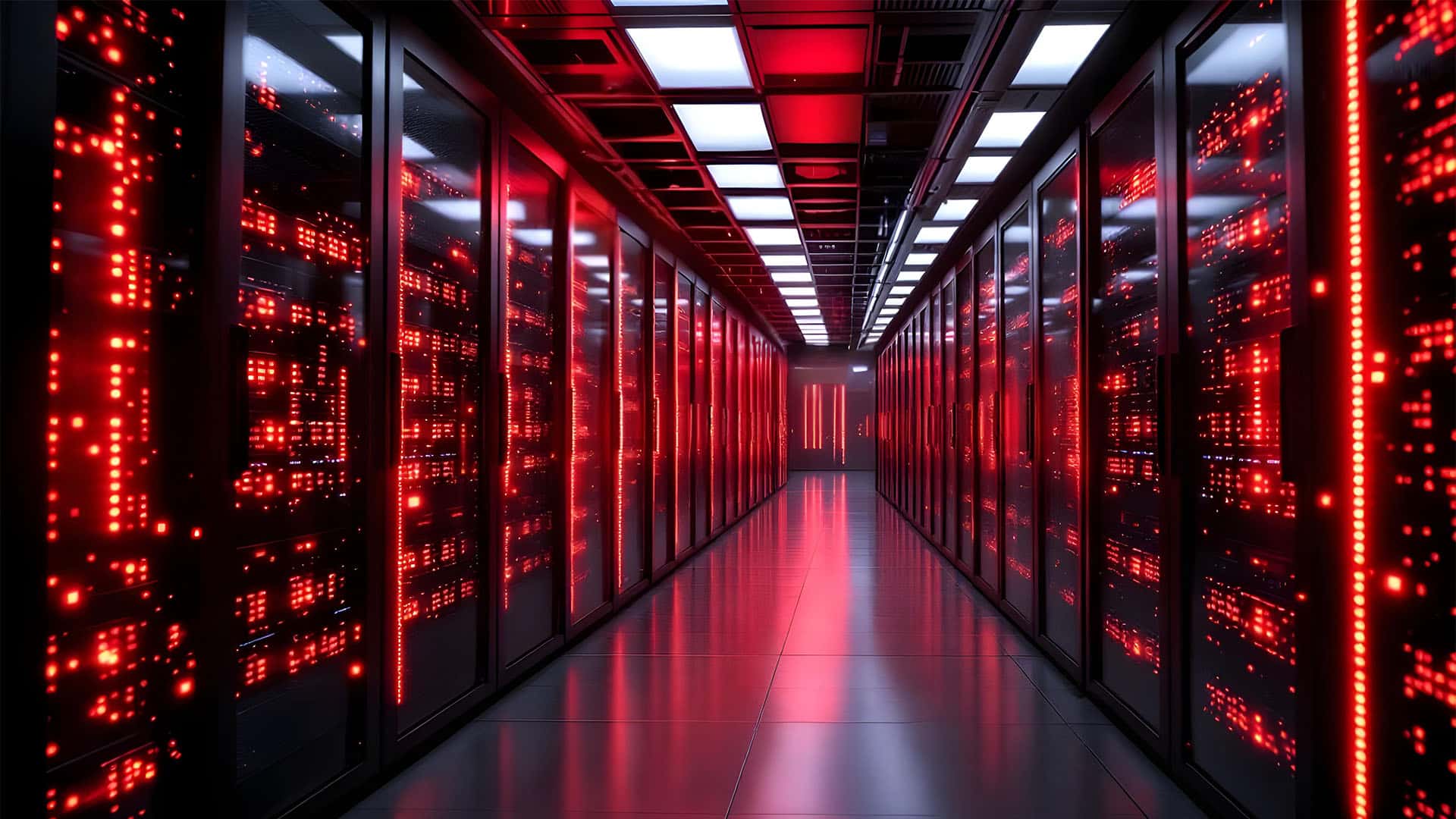
AI training and inference run on massive, distributed GPU clusters—systems that only perform as well as their synchronization. As clusters scale from thousands of GPUs today toward six figures next year and potentially one million by 2030, precision timing becomes the multiplier for throughput, reliability, and ROI. This brief explains why tighter time sync (the “heartbeat” of AI systems) is now a first-order design decision for data center leaders.
The paper demystifies how timing quality—low jitter, stable clocks, accurate timestamps—reduces GPU idle time, eases congestion, and improves scaling efficiency. Doubling data rates demands halving jitter just to hold timing margin; getting this right keeps GPUs busy and SLAs intact while lowering cost per workload and improving power efficiency.
Developed in partnership with SiTime, this market report by Futurum Research translates theory into practice with concrete guidance on evaluating modern timing solutions in AI data centers. It details new hardware and an integrated software stack that together deliver higher sync precision and multi-hour holdover without board changes.
In this market report, you will learn:
- Why synchronization governs AI cluster efficiency—and how timing errors cascade into cost and risk.
- How low-jitter clocks and accurate timestamps cut GPU idle time, boost utilization, and improve ROI/TCO.
- What to require from timing hardware: Stability under thermal/vibration stress, differential outputs for 800G+, and digital tuning.
- Why software matters: Integrated PTP servo/holdover, upgradeability without board spins, and measurable sync gains over quartz.
- Practical next steps to evaluate, pilot, and scale precision timing across switches, SmartNICs, and GPU nodes.
If you are interested in learning more, be sure to download your copy of Precision Timing’s Critical Impact on Data Center ROI today.
Published by Futurum.
More from Olivier Blanchard
Automotive Grows to $56.6B by CY2030, Anchoring Edge Silicon’s Structural Certainty
Olivier Blanchard, Research Director at Futurum, notes automotive grows across all three scenarios to $56.6B base by CY2030, anchoring structural certainty in the edge silicon market.
NXP Tech Days: Can Physical AI Reference Designs Solidify the Neural Axis?
Brendan Burke and Olivier Blanchard, Research Directors at Futurum, share their insights from NXP Tech Days Silicon Valley, where reference designs from humanoid hands to a four-board MCX A5 networking demo gave NXP’s neural axis architecture production weight.
Can NXP MCX A5 MCUs Secure the Industrial Edge Before Agentic Attackers Arrive?
Brendan Burke and Olivier Blanchard, Research Directors at Futurum, share their insights on why NXP’s MCX A5, the first MCU to combine a 10BASE-T1S digital PHY, topology discovery, and post-quantum cryptography, gives industrial defenders a head start on agentic attacks.