Orbital Computing Can Reach $1 Trillion Addressable Market by 2030

Updated
The rise of orbital computing, driven by massive AI workload demand (300 GW by 2030) and the crisis of terrestrial grid connection delays, presents a trillion-dollar market opportunity.
Futurum's Brendan Burke,
Cite this
Brendan Burke, The Futurum Group, "Orbital Computing Can Reach $1 Trillion Addressable Market by 2030," April 29, 2026. https://preview.erikbethke.com/research-reports/orbital-computing-can-reach-1-trillion-addressable-market-by-2030/
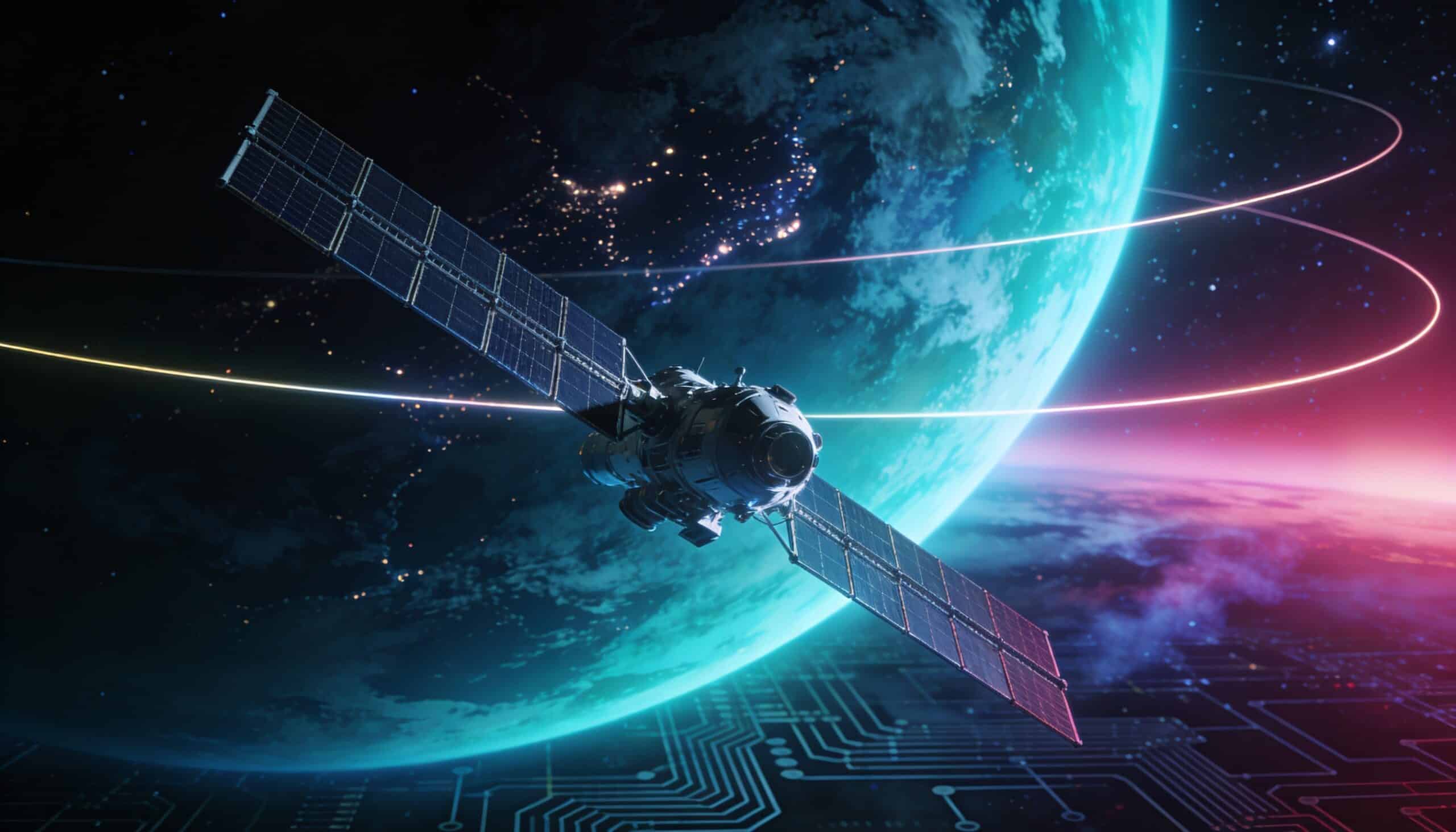
The burgeoning field of orbital computing is rapidly transitioning from a theoretical concept to a funded industrial race driven by the increasing constraints and escalating costs of terrestrial data centers. With AI workload demand potentially requiring 300 GW of compute by 2030, operators face a crisis: acquiring grid-connected power can take 3 to 7 years, stranding billions of dollars in finished silicon. This has led to two highly capital-intensive strategies: accelerating terrestrial off-grid AI factories with dedicated power plants, and aggressively pursuing orbital data centers, which promise limitless, unattenuated solar power and the infinite cooling sink of deep space, bypassing Earth’s regulatory gridlock.
Despite the structural advantages of space, deploying a gigawatt-scale AI factory in Low Earth Orbit (LEO) currently incurs a significant economic premium. However, the central thesis of our analysis is that the cost crossover point between orbital and terrestrial infrastructure will arrive first for off-grid deployments, rather than for all AI compute. This is largely dependent on SpaceX Starship achieving full reuse and high flight cadence, which is projected to push launch costs below $100/kg by the end of the decade, thereby collapsing the single largest cost input. For most grid-connected data centers, which benefit from existing electrical infrastructure, terrestrial deployment is likely to remain the lower-cost option in the long term.
The economically justified addressable market for orbital computing can reach approximately $1 trillion by 2030, pending cost declines and efficiency gains, representing about one-third of the $3 trillion in AI compute capital expenditure. This segment includes capacity facing multi-year grid queues, sovereign compute mandates, and incremental demand beyond terrestrial infrastructure’s capacity. The success of this transition relies on further technological progress, specifically steep declines in launch costs and increased efficiency in satellite hardware, such as radiators and solar panels. An emerging ecosystem is forming across the value chain, with specialized vendors in compute clusters, semiconductor hardening, and optical interconnects, though the market will remain supply-constrained by launch throughput and satellite manufacturing capacity well beyond 2030
In our latest Analyst Insight Report, Orbital Computing Can Reach $1 Trillion Addressable Market by 2030, Futurum Research covers:
- The primary drivers pushing AI computing to orbit are severe delays in terrestrial grid interconnections and the rising costs of building off-grid data centers.
- The crossover for cost parity between orbital and terrestrial computing will occur first for off-grid deployments, which are currently facing escalating costs, rather than for grid-connected facilities.
- The key technical challenges and cost drivers for orbital data centers are launch costs and the mass of satellite hardware, particularly the radiators needed for heat rejection.
- A growing ecosystem of vendors is emerging across the value chain, specializing in space-hardened silicon (e.g., AMD, NVIDIA), optical inter-satellite mesh networking (e.g., Starcloud, Kepler), and vertical integration (e.g., SpaceX, Amazon).
If you are interested in learning more, be sure to download your copy of Orbital Computing Can Reach $1 Trillion Addressable Market by 2030 today.
Published by Futurum.
More from Brendan Burke
Rapidus’ IIM-1 Fab Construction is Completed. Will Cadence Make It the First Agentic Foundry?
Rapidus’ IIM-1 fab completes construction in Chitose, leveraging Cadence Innostack AI Super Agent for its Raads platform and IBM 2nm transistor IP to compete with TSMC, Intel, and Samsung in inference accelerator production.
SiFive BigSky Ships the First RISC-V Server. Is the GPU Head Node the Prize?
Brendan Burke, Research Director at Futurum, shares his insights on SiFive’s BigSky, the first enterprise-grade RISC-V server, and why CUDA head node duty for NVIDIA GPUs is the socket that matters.
QumulusAI Q2 FY 2026: 118% Revenue Growth for Hyperspeed AI Compute Deployment
Brendan Burke, Research Director at Futurum, analyzes QumulusAI’s Q2 FY 2026 earnings, focusing on direct AI compute demand, GPU fleet expansion, and capacity execution.